Why Is the US So Anxious to Unlearn the Lessons of the Chernobyl Disaster?
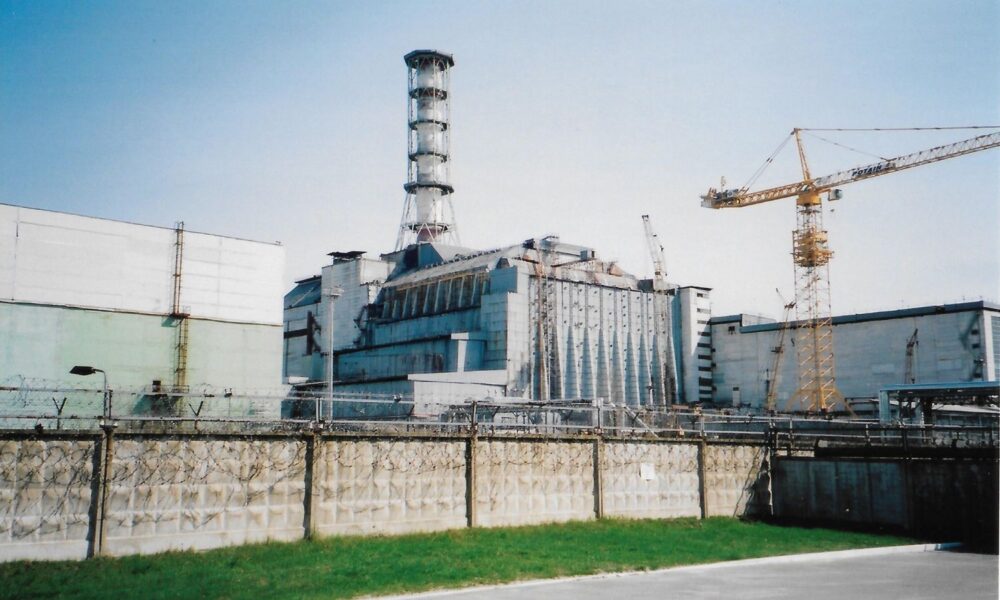
The following is an excerpt from an article published recently by the Union of Concerned Scientists and written by Edwyn Lyman, Director, Nuclear Power Safety.
April 26, 2026 marks the 40th anniversary of the Chernobyl Unit 4 nuclear power plant disaster in the former Soviet Union. A toxic combination of defective reactor design, deficient safety analysis, disregard for operating procedures and administrative controls, prioritization of power production over safety, lack of independent regulatory oversight —and, above all, excessive secrecy—led to the worst nuclear reactor accident in history.
Operators botched a safety test and took the reactor into an unstable state, causing a rapid rise in power that triggered violent steam explosions that blew apart the reactor core and surrounding structures. Fires burned for days. A massive amount of radioactivity dispersed across the former Soviet Union and much of Europe. Hundreds of thousands of individuals were evacuated or relocated from contaminated areas, and a 30-kilometer radius “exclusion zone” was established that is still in place today. Dozens of emergency personnel died within weeks from acute radiation syndrome, and thousands of children developed thyroid cancer from radioactive iodine exposure. Ultimately, tens of thousands of cancer cases throughout Europe are projected to occur from the radioactive pollution caused by the disaster.
The United States and many other countries have sought to distance themselves from the potential for a Chernobyl-like accident by asserting that their nuclear regulators would never have licensed a reactor with the safety flaws of the RBMK (a Russian acronym for “high-power channel-type reactor,” the Chernobyl-4 design), and that light-water reactors (LWRs), by far the most common type of power reactor in operation, are far safer. While this argument has some validity, soon after the accident it became clear the safety benefits of LWRs compared to the Chernobyl-4 RBMK were not as great as advertised—a point later illustrated by the 2011 Fukushima Daiichi triple LWR meltdown in Japan. And today, many of the regulatory requirements and standards that underlie this confidence in the safety of the US nuclear fleet are being thrown by the wayside as the Trump administration recklessly pushes to “unleash” nuclear energy as quickly as possible.
Read the full article here.