Dow Chemical Wants to Build an Experimental Nuclear Reactor on San Antonio Bay, What Could Go Wrong?
By The Nuclear Skeptic
In a significant win for local opposition, the Nuclear Regulatory Commission’s (NRC) Atomic Safety and Licensing Board has granted a petition to intervene in the licensing process for Dow/X-energy’s proposed small modular nuclear reactor (SMR) project, the first of its kind to apply for a construction permit. The decision marks a pivotal victory for the San Antonio Bay Estuarine Waterkeeper, a local environmental advocacy group representing fisherpeople and community members who have long opposed the project and have dealt with water contamination stemming from Dow’s operation in Seadrift, Texas for decades.
The ruling effectively halts the immediate progression of the construction permit application for the Long Mott Generating Station (LMGS). The facility, proposed by Long Mott Energy (LME)—a subsidiary of the chemical giant Dow and Union Carbide (yes, the same Union Carbide responsible for the most deadly environmental disaster in history)—aims to construct four pebble-bed nuclear reactors in Seadrift. While the project has been touted as one of the first of its kind globally, the Licensing Board found that financial concerns raised by local petitioners merit intervention. The Board could ultimately deny the construction permit, placing the future of the Dow/X-Energy collaboration in jeopardy as well as other proposed X-energy reactors, including at the Hanford Nuclear Site on the Columbia River in Washington state.
At the heart of the Waterkeeper’s successful petition is the contention that LME has failed to demonstrate the necessary financial qualifications to build and operate a nuclear facility safely. These concerns regarding financial viability were sharply underscored by recent corporate developments. Just days prior to the NRC’s decision, Dow announced a “restructuring” involving the elimination of 4,500 jobs, constituting nearly 15 percent of its global workforce. Many of these cuts are slated for Texas, with specific impacts on the Seadrift area. This juxtaposition of mass layoffs with an overly ambitious, capital-intensive nuclear construction project, prone to runaway cost escalations, has fueled the Waterkeeper’s argument that the project lacks the financial stability required for such a high-risk venture.
Despite the admission of their financial contention by the NRC, San Antonio Bay Waterkeeper expressed significant disappointment regarding the NRC’s dismissal of their safety concerns, albeit on a technicality. Nuclear safety expert, Dr. Edwin Lyman, asserted that the proposed X-Energy Xe-100 design—a “first-of-a-kind” pebble-bed reactor—presents unique risks that have not been arguably addressed:
“The Board’s decision to ignore critical evidence and accept Long Mott Energy’s unjustified assertion that containment-free reactors can satisfy NRC’s regulations poses a direct threat to the health and safety of Texans and the broader U.S. public,” said Dr. Edwin Lyman, director of nuclear power safety at the Union of Concerned Scientists (UCS), a nonprofit group. “Long Mott Energy will still need to prove its claims later to obtain NRC operating licenses for these reactors, but even if the fuel proves defective there is no way that the NRC would order the company to retrofit the reactors with containments after they are built.”
According to Dr. Lyman, the fuel balls inside the proposed Dow/X-energy reactor, will become “enormously more radioactive than when they first entered the reactor.” They will become high-level radioactive waste (irradiated or ‘spent’ fuel), which can give a lethal dose in a few minutes if unshielded.
Texas and the surrounding community should assume that all of the waste will be kept on site indefinitely. Neither LME nor the NRC has even estimated if or how long the waste from pebble bed nuclear reactors can be stored and how dangerous the site will be as soon as the reactors start and for the thousands of centuries the waste stays radioactive.
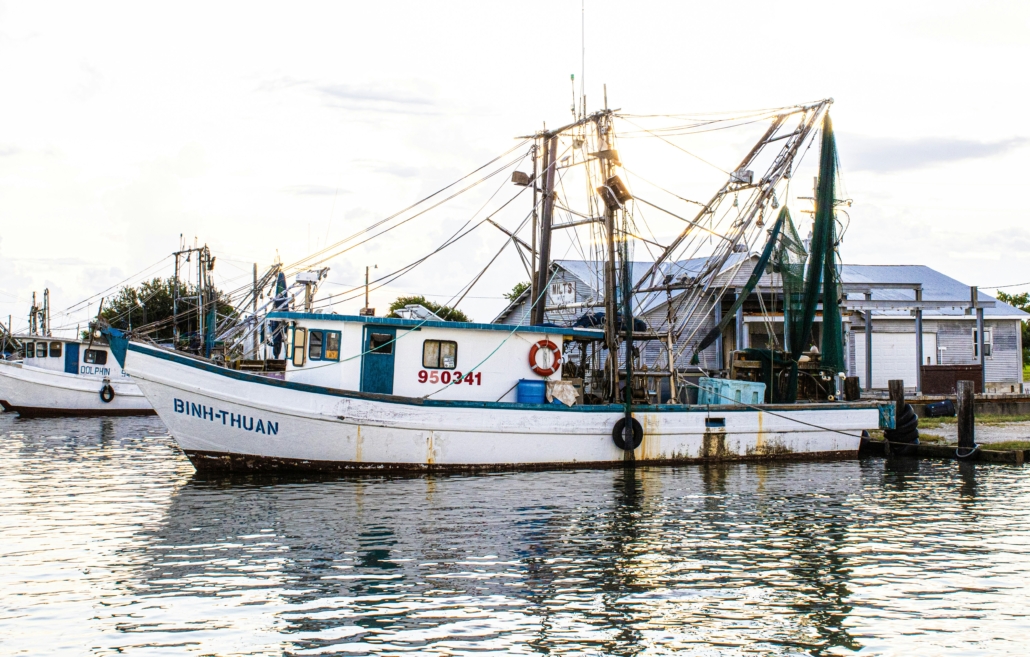
For the local community, specifically the fishing industry dependent on the health of the San Antonio Bay, the stakes are existential.
Diane Wilson, the executive director of San Antonio Bay Estuarine Waterkeeper and a 2023 Goldman Environmental Prize winner, emphasized the disconnect between Dow’s economic retreat from the region via layoffs and its simultaneous push for an expensive industrial experiment in South Texas:
“Dow is laying off thousands of Texans while at the same time seeking to build a wildly expensive experimental nuclear reactor in our backyard. (We) won’t stop until this radioactive experiment on South Texas and our bay is terminated.”