Republished with permission from Beyond Nuclear, find original article here.
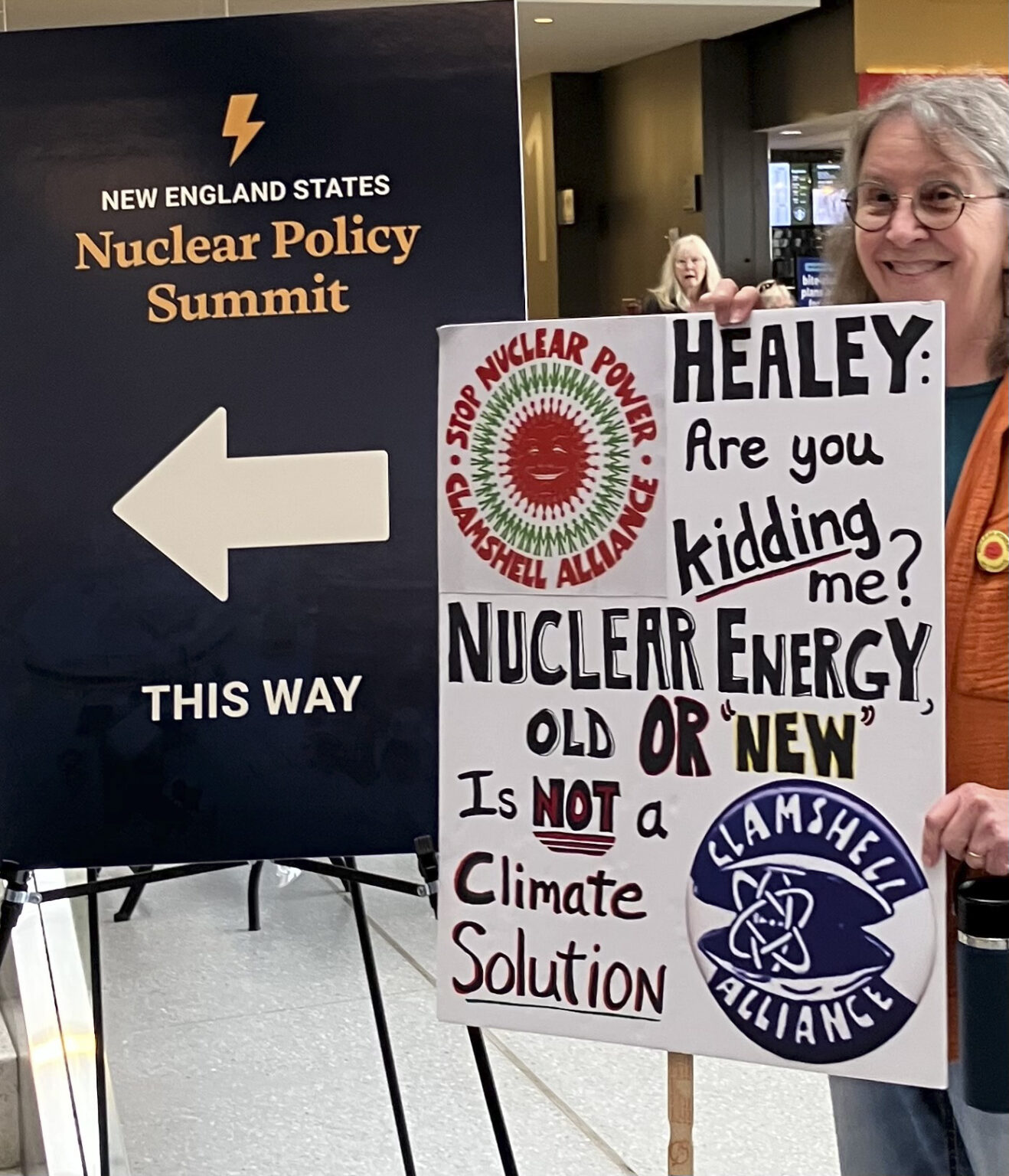
On September 30, 2026 at the invitation of Massachusetts Democrat Governor Maura Healey representatives and researchers from all six New England Governors (MA, NH, VT, ME, CT, RI) convened at the University of Massachusetts Lowell for the “New England Regional Nuclear Policy Summit”. All of the New England Governors representative speakers appear to be in lock step for yet another misadventure in reopening the Atomic Pandora’s Box. In fact, the summit attendees would have been enlightened by an opinion piece that appeared the same morning in the CTMirror by Stanley Heller, Promoting Enduring Peace, “CT’s reckless drive for more nuclear power(opens in new tab)” and well worth all of us to be advised by.
However, there was a hint of caution in extending any further blind faith(opens in new tab) in this current round of nuclear industry hype and lobby funded political champions. There is no rational reason to believe that anything is going to be different from the previous two decades of technological and financial failures of a “nuclear renaissance” that has repeatedly relapsed since it introduction in 2005 with Congress’ passage of the Energy Policy Act of 2005. Of the 34+ “advanced” reactors that industry offered up and the US Nuclear Regulatory Commission (NRC) generously approved Combined Operating License Applications (combining construction permits and operating licensing in a one stop shop), on four units broke ground in 2013 while all of the other awarded applicants stepped back to watch.
The two South Carolina units at V.C. Summer Unit 2 and 3 cancelled their construction project midway with a sunk cost of over $9 billion passed onto the state’s captured and irate ratepayers and not a watt of electricity. The SCANA utility responsible for the energy boondoggle collapsed with the company CEO and senior manager federally convicted of wire and mail fraud to serve prison time. The responsible Westinghouse Electric Senior President of the AP1000 project was also convicted of conspiracy to commit fraud and served time in federal prison. The Georgia AP1000 Westinghouse project for Vogtle Units 3 and 4 was eventually completed seven years behind schedule at tremendous construction cost overruns. The original estimated cost of completion for Vogtle 3 and 4 was $14 billion turned out to be at least $36 billion to start up.
Nothing has really changed except for the rebranding of the nuclear power technology that small modular reactors (SMR) and micro reactors will be easier, faster and cheaper to build. In fact, quite the opposite is likely given a lot of small reactors will by all accounts cost more with the loss of the concept of “economies of scale.” Putting nuclear reactors on an assembly line is already decades behind the original energy generating SMR (Small Modular Renewables).
Addressing the gathered governors summit “Nuclear is already part of this region’s ecosystem,” said Sukesh Aghara, UMass Lowell Professor of Nuclear Engineering and Associate Dean of Research . Which Beyond Nuclear agrees is true but not as Prof. Aghara intended it. Every state that ever constructed and operated nuclear power stations, still has all of the high-level radioactive waste in the form of irradiated fuel that remain as virulent pocks on the land with no scientifically proven and socially accepted long-term management plan for the tens of thousands of years that the waste will need to be isolated.
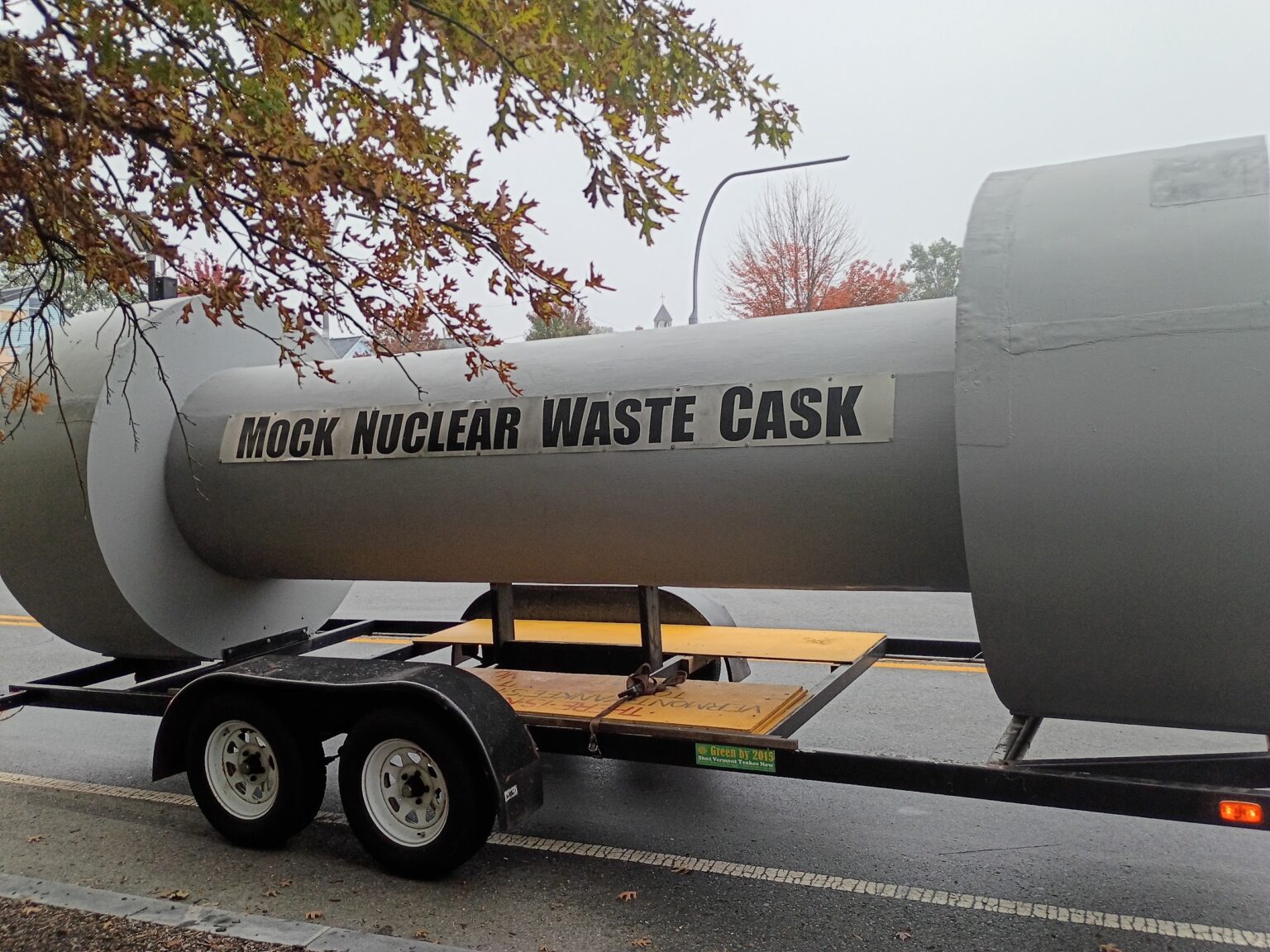
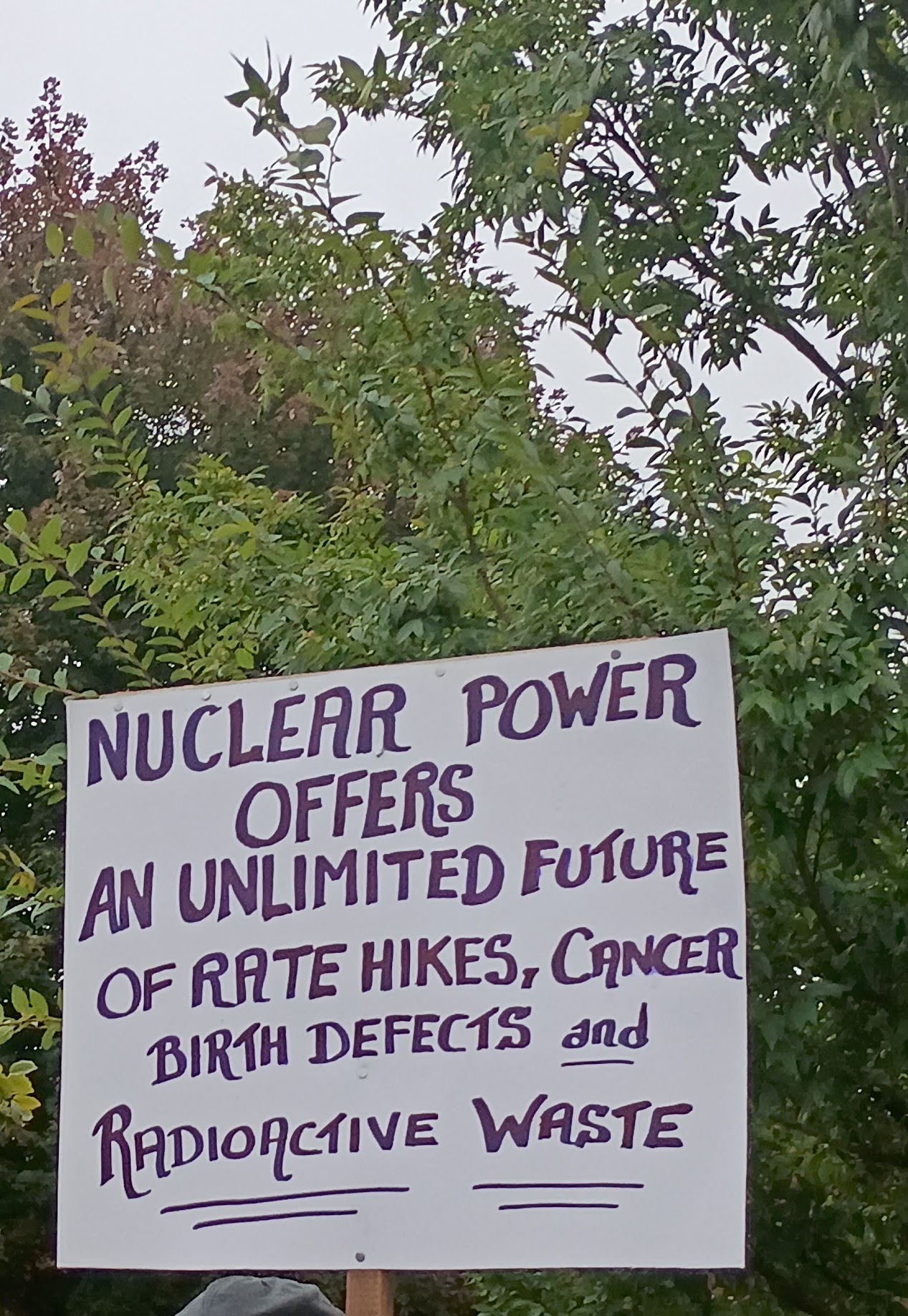
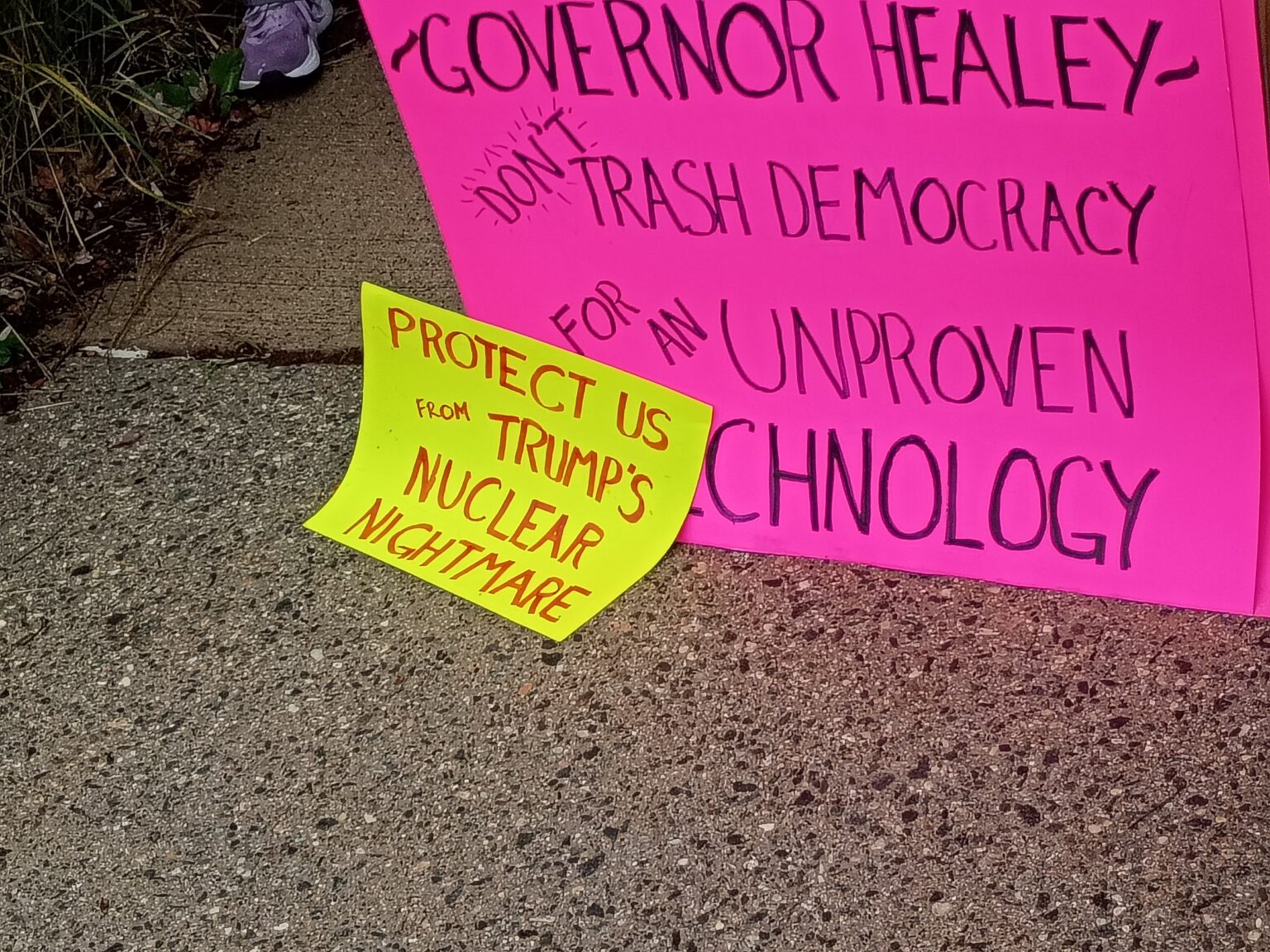
Outside of the Governors Nuclear Summit, a well attended protest sponsored and organized regionwide had responded to a “Call To Action(opens in new tab)” by the Clamshell Alliance, Citizen Awareness Network and the Commonwealth Coalition for Democracy and Safe Energy (CCDSE). The Governors were reminded of the true legacy of nuclear power in their states of unmanaged nuclear waste, the cost of electricity from nuclear power plants ever spirally upwards and the clinical evidence that invisible radioactivity is carcinogenic (causing cancers), teratogenic (causing genetic damage) and mutagenic (causing birth defects).
Photos courtesy of Shel Horowitz and Susanae Glovaki, Clamshell Alliance and the Commonwealth Coalition for Democracy and Safe Energy (CCDSE)
The Department of Energy (DOE) has a problem. They have a nuclear addiction and a growing mountain of toxic, radioactive waste. To solve it, they are eyeing Idaho once again. Governor Little recently signed a Memorandum of Understanding (MOU) with the DOE, and they are trying to sell it to us as a “Nuclear Lifecycle Innovation Hub.”
We’re not buying it. This is a nuclear dump dressed up as an “innovation campus,” and DOE is simply hoping that the temptation of jobs and billions of dollars will convince us to turn Idaho into America’s nuclear waste dump.
Recently, I sat down with Roland Beres, who wanted to get the Snake River Alliance’s reaction to the Governor’s signing the MOU with DOE. Roland has a lot of experience following nuclear issues. Notably, he covered events leading up to the Idaho Settlement Agreement, when Governors Batt and Andrus were fighting the feds for sending out-of-state radioactive waste into Idaho. That history matters, because it tells us this isn’t a new fight—it’s the same fight, with slicker marketing.
Today’s political machinery is quickly paving the way for Manhattan Project 2.0, endangering our health and silencing local opposition. Per Executive Order 14300, the Nuclear Regulatory Commission is revising radiation standards and reducing protections for workers and communities. Idaho’s Senate passed SCR 120 to claim that reprocessing nuclear waste fits into the Idaho Settlement Agreement framework. Not to be left out, Idaho’s House passed HB 714, which prohibits local governments from saying “NO” to these dumps and reprocessing facilities in their communities.
The Nuclear Myths
The first myth is money. The DOE isn’t handing Idaho billions of dollars. According to their own request for proposals, they are looking for projects that *prioritize private and state capital*. They offer “targeted, conditional, and time‑limited federal support.” In other words, Idaho taxpayers are on the hook for the cost, while the feds offer a loan and a promise to protect themselves from “open-ended liabilities.”
The second myth is the jobs. Idaho’s response to DOE’s request states we already have the infrastructure and can start fast. That translates to fewer construction jobs. And while the Tech bros designing these untested reactors are boasting that they “practically run themselves,” that means they aren’t going to hire many permanent workers. The promise of “thousands of jobs” is a mirage. We might fix a few roads, but beyond that, thousands of long-term jobs are far-fetched.
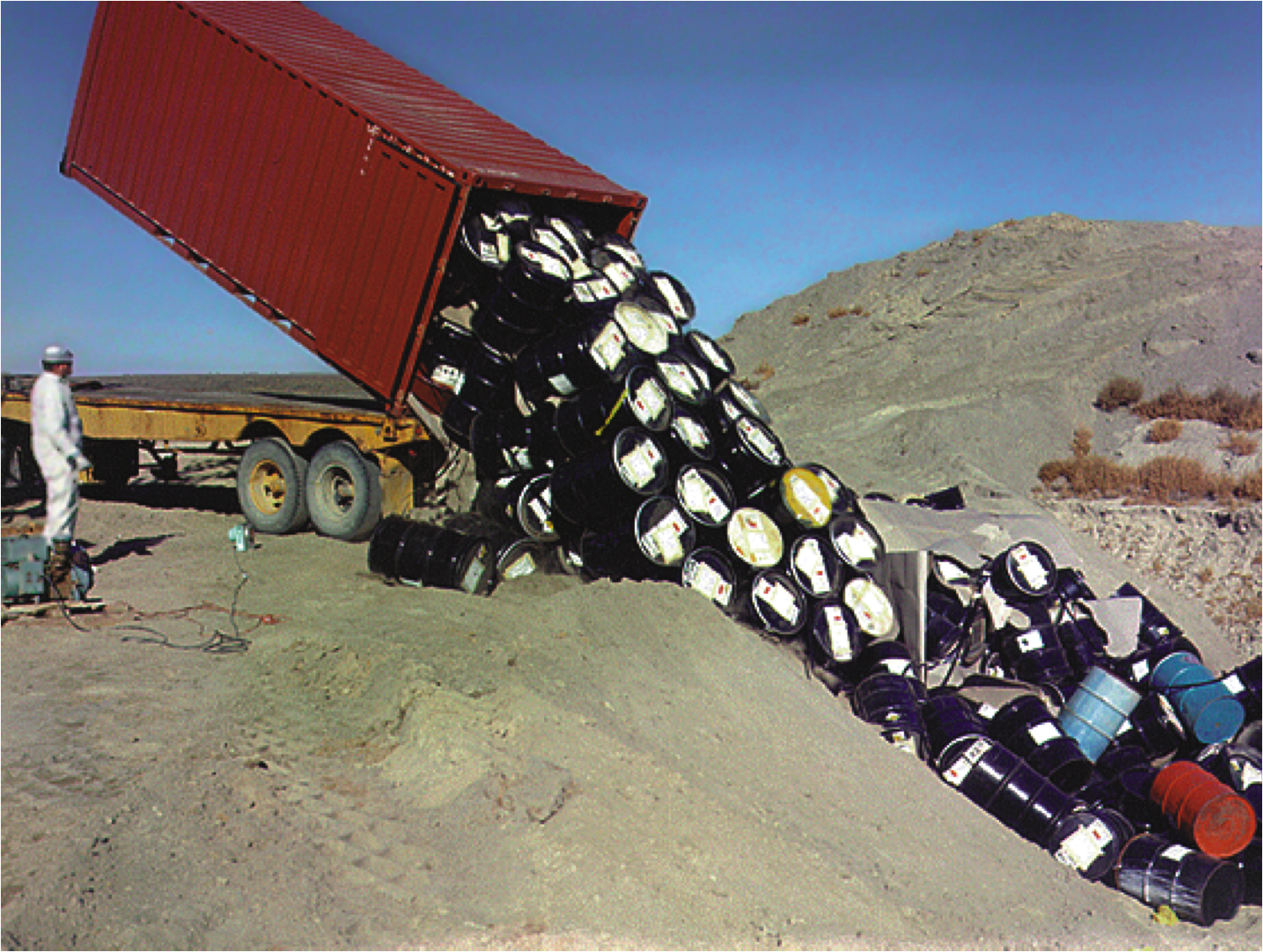
The third myth is the waste. Our radioactive legacy can still be seen out at the site in the Arco Desert. Last year, when the Snake River Alliance visited Idaho National Lab I noticed the waste we got from the Three Mile Island meltdown in 1979 is still there, sitting in huge concrete sarcophagi. We saw a warehouse stacked with barrels of waste, much from the Rocky Flats bomb factory—barrels that needed to be recategorized because we have no idea what Colorado actually shipped us. We drove around the 90-acre burial grounds, where a “thousand-year cap” will be placed.
Governor Little might say “that’s all been cleaned up,” but that is dangerously deceptive. We can’t completely clean up nuclear waste. INL has done a good job mitigating a lot of it, but the truth is there is no permanent nuclear waste repository in the country. The waste just keeps piling up, mostly at nuclear power plants back east, and if that waste comes here, it will stay in Idaho permanently. The DOE has a track record of broken promises, and they are not to be trusted.
A Dangerous Bet
Some politicians and nuclear cheerleaders claim we can reprocess our way out of this. We cannot. Some point to the DOE’s Waste Isolation Pilot Project (WIPP) facility in New Mexico, but it only takes defense-related transuranic waste, and was never meant to be permanent. There have already been two 10-year extensions since 2010, and New Mexico isn’t a solution for Idaho’s burden. New Mexicans don’t want a permanent nuclear dump either.
Idaho is being asked to accept a permanent nuclear burden in exchange for a few temporary construction jobs and mythical money. The waste isn’t leaving. The feds and the nuclear industry have had decades to solve this, and they haven’t. We shouldn’t be the dumping ground for their failures. It is time to reject this dangerous bet and demand a real plan that doesn’t put our people, water, and land at further risk.
Idaho is not America’s dumping ground – not for cash, not for jobs, and not for nuclear waste that outlives our great, great grandchildren’s grandchildren.
https://nuclearcosts.org/wp-content/uploads/2026/09/090426_ID_INL_1969_dumping_waste_barrels.png11321502Web Masterhttps://hastingsgroupmedia.com/website_d72e85d9/wp-content/uploads/2025/05/Nuclearlogo340.svgWeb Master2026-09-04 10:53:292026-09-04 14:07:27Idaho is Being Sold a Dump, Not a Future
You would think after the last several weeks we just had, the promoters of nuclear power might be tempering their messages a little. Or even reconsidering their position if they haven’t yet drunk too many gallons of the nuclear Kool-Aid.
But what we are seeing instead is a continued and relentless propaganda campaign re-affirming the “milestones” and “breakthroughs” of new nuclear power projects.
For example, Deep Fission, with its plans to try to drop what could eventually be as many as 100 15MW micro reactors down mile-deep boreholes in the tiny community of Parsons, Kansas (population 9,600), crowed about a recent approval from the US Department of Energy.
Water sources are drying up under climate crisis conditions, but the nuclear bros and their willing political accomplices carry on as if heatwaves, droughts and wildfires simply aren’t happening, ignoring the immense risks they pose to nuclear plants now — and into the future when conditions will be even worse.
What the DOE approved was the company’s Nuclear Safety Design Agreement for its Gravity™ Nuclear Reactor. Deep Fission described this as “a major regulatory milestone.”
What it really amounts to is permission to keep on doodling on the napkin, or, put less snarkily, that they may proceed with their reactor design.
Holtec, the New Jersey-based waste and decommissioning company announced late last month that with the US Nuclear Regulatory Commission (NRC) having granted a License Termination Plan for the closed Oyster Creek Generating Station, the company can now move forward with plans to site four of its SMR-300 reactors at the site.
Collectively, this represents a bigger output than the old 650 MW Oyster Creek reactor, but of course SMR owners are claiming that because their reactors are so much smaller, there need be no emergency evacuation zone or other disaster preparedness beyond the property fence line.
Because after all, what kind of disaster could possibly occur?
Evidently, none of these reactor bros touting their scammy crypto-nukes have been watching the news, since they are just carrying on as if Nothing Happened.
So what didn’t they see? The Romanians dynamiting the Danube river in a desperate attempt to redirect the ever scarcer river water toward their lone Cernavoda nuclear power plant? One reactor there was already closed and now the second one is, as well, as the Danube suffered another drastic drop in water level.
Map provided by ERCC – Emergency Response Coordination Centre/Wikimedia Commons.
That in turn has affected neighboring Moldova which “relies on Romanian power to cover up to 60% of its own electricity shortages,” according to reporting in The Guardian. The loss of Cernavoda could result in power outages, Moldovan authorities warned.
In Hungary, the Paks nuclear power plant was operating at around 10% of its 2,000 MW capacity at time of writing and the Hungarians, like the Romanians, were starting to sink large barges in what is left of the Danube to try to raise water levels and continue to cool the plant.
Then there was the scorched heathland and billowing smoke that obscured the view of the Sizewell nuclear power plant on the English coast just a few miles away. The raging wildfire close to the still operating Sizewell B reactor was a close call, another stroke of luck with the wind blowing the other way. That day.
The nearby precious Minsmere Nature Reserve hasn’t been so lucky, with the fires causing a massive loss of wildlife and habitat. But plans to proceed with the two French Sizewell C EPR reactors have not been abandoned and the UK government insanely granted Sizewell B a 20-year license extension on top of its existing one that would allow it to operate out to 2055.
The plant actually sits on the beach, never mind the fact that climate crisis-caused drastic sea-level rise is an empirical inevitability. And, apparently, never mind the wildfires either, which, with the United Kingdom now in its fifth scorching heatwave of the summer, are only likely to get larger and more frequent.
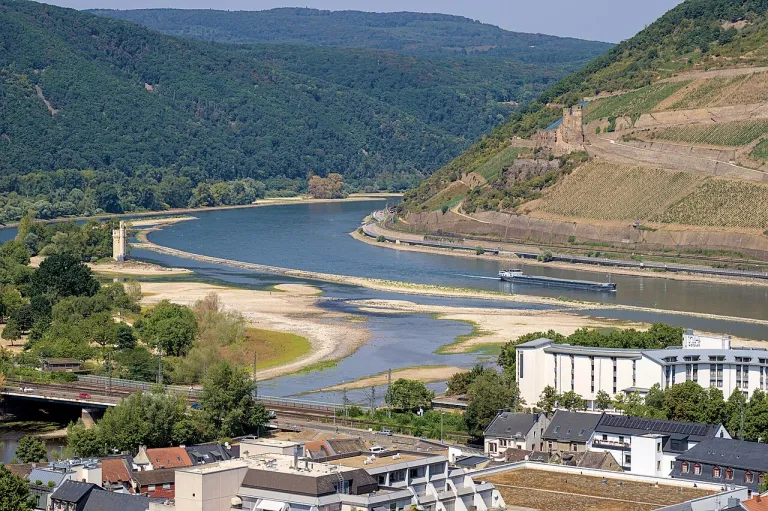
Exceptionally low water levels in rivers across Europe (August 2026 near Bingen, at the confluence of the Rhine and Nahe rivers shown here) are causing critical shortages of cooling water at nuclear power plants , forcing them to power or shut down. (Photo: ThoBel-0043/Wikimedia Commons.)
Maybe the nuke bros also missed the people fleeing for their lives across Europe while headlines reminded these hapless refugees and others roasting in cities, towns and countryside that their nuclear power plants would not be available to provide the much-needed electricity at a time it was needed most. Instead, people sweltered, and, in some cases, died, from the extreme heat, their villages in some places burned to the ground.
France had to power down and even close many of its reactors due to the extreme heat and then, of course, came the climate change-caused jellyfish swarm at Gravelines, now looking to be an annual event, causing those reactors to close. Jellyfish are a problem because they clog the cooling water intake system.
Meanwhile, parts of the US have been on fire, too, while smoke from Canadian wildfires a few weeks back enveloped a large swath of the Midwest and Northeast in a choking cloud of acrid smoke and falling ash.
So far, and fortunately, there have been no nuclear power plants in the paths of these fires — or some of the catastrophic flooding, including in Texas.
But it really doesn’t stretch the imagination too much to picture a very different scenario.
Nuclear power plants can’t operate well — or sometimes at all— in extreme heat or drought because they require water to cool them and that water needs actually to be cool in the first place. And available.
If the water is too hot or too scarce, nuclear power plants have to reduce power or even shut down altogether.
But when they do, it’s not like turning off a car engine. Because of the highly radioactive and thermally hot fuel inside nuclear reactors —and the fuel pools into which the irradiated fuel rods have been offloaded — they still need cooling. If you can’t cool them, they will eventually melt down. So water must continue to be available and so must electricity to get it there and power the plant.
That is why we have argued for years that nuclear power plants are not reliable, especially in extreme weather conditions. Instead, they are a liability. And with ever more violent weather conditions under the climate crisis, those risks are only going to get worse and disaster more likely.
The events on March 11, 2011 in Japan would have been infinitely less catastrophic, and a whole lot less expensive, if they hadn’t involved a triple nuclear meltdown along with the massive earthquake and tsunami. And, as with Sizewell, they would have been infinitely worse radiologically, had the wind been blowing the other way. Despite this, vast areas received radioactive fallout, complicating rescue efforts of those caught in the earthquake and/or the tsunami.
Fire is one of the biggest risks at a nuclear power plant, largely because of the lethal radioactive inventory on the site. “Irradiation produces a variety of fission products and actinides that multiply the radioactivity in the original uranium fuel by more than 100 million times,” according to The World Nuclear Waste Report (see page 27) published in 2019 by the Heinrich Böll Stiftung. All of this waste currently remains at US reactor sites and at most such around the world, absent a safe, long-term storage solution.
If a raging wildfire engulfed a reactor site, the outcome could be catastrophic, rendering vast areas uninhabitable. Another Chernobyl Zone could be born.
If a fire engulfed a solar or wind farm, that would be a nuisance. The panels or turbines would need to be replaced. But no one would be at risk of thyroid cancer or worse, nor would they need to flee, abandoning their homes and land forever.
Headline photo: During the first week of June 2009, Sustainable Resource Alberta burned nearly 8,000 hectares of forest in Western Alberta, just east of the Saskatchewan River Crossing on the Icefields Parkway and Highway 11. The forest was destroyed to bring about greater diversity, stem the spread of mountain pine beetle and to create a fire barrier for any future wild fires. by Cameron Strandberg/Wikimedia Commons.
The artificial intelligence bubble is starving for electricity so big tech is teaming up with the administration to “Make America Nuclear Again” – an unaffordable, dangerous alliance forming behind closed doors inside the nation’s capital to resurrect an economically broken and hazardous industry.
Thankfully lawmakers are starting to hear the other side of this story. At a Capitol Hill briefing earlier this month, an esteemed panel of scientific, legal, and regulatory experts issued a stark warning to lawmakers: the rush to expand nuclear energy by gutting safety regulations poses catastrophic risks to public safety, national security, and global climate resilience and will thwart affordability goals. Hosted by Ralph Nader and organized by Beyond Nuclear and the Nuclear Information and Resource Service (NIRS), the briefing presented a sobering look at an industry attempting to bypass democratic oversight with the full backing of the Trump White House.
The core driver of this massive atomic push is the artificial intelligence bubble, allowing speculative tech companies with little to no experience building nuclear power plants to assume huge amounts of debt, set aside climate goals, and drive the electricity grid to the brink of collapse. Physicist and former Department of Energy Under Secretary, Dr. Joe Romm, explained how tech’s hunger for baseload electricity is driving a calculated strategy that blocks affordable renewable energy deployment in favor of continued fossil-fuel generation and fast-tracked nuclear development. To build reactors quickly, the administration is aggressively pushing to curtail the authority and independence of the U.S. Nuclear Regulatory Commission (NRC).
Former NRC Commissioner Peter Bradford warned that stripping the agency of its oversight is an alarming step backward for an already compromised regulator. Nuclear proponents seek to rubber-stamp unproven reactor designs and bypass long-standing public health and environmental protections.
The industry’s aspirations rely heavily on small modular nuclear reactors (SMRs) and “advanced” fast-reactor designs, marketed by billionaires as inherently safe and revolutionary. However, Dr. M.V. Ramana, a professor at the University of British Columbia, dismantled these claims during the briefing. He emphasized that deregulation will not magically solve nuclear power’s chronic history of multi-billion-dollar cost overruns and decades-long construction delays, pointing to the financial disaster of Plant Vogtle in Georgia as a prime example of the industry’s systemic failure.
Adding a chilling dimension to the briefing, Dr. Edwin Lyman of the Union of Concerned Scientists sounded the alarm on the administration’s unprecedented plan to distribute Cold War-era surplus plutonium to private startups, such as Oklo, for fuel. Lyman warned that treating weapons-usable plutonium as a standard commercial commodity bypasses rigorous safety analyses, introducing severe public safety and nuclear proliferation hazards that haven’t been seen in decades.
The briefing also emphasized how fast-tracking nuclear power actively undermines climate adaptation. Environmental attorney Diane Curran illustrated that by circumventing crucial federal laws like the National Environmental Policy Act (NEPA), the NRC is completely failing to account for how climate-driven weather hazards—such as severe flooding, droughts, and extreme temperatures—imperil reactor stability over their lifespans.
Furthermore, Sharon Squassoni of George Washington University highlighted the ominous militarization of the civil nuclear sector. Civil reactors are now being prepared to power military installations and kinetic AI weapon systems. Squassoni warned that this blurring of civilian and military lines enables developers to sidestep traditional NRC regulation entirely, heightening global weapons proliferation risks and setting a dangerous international precedent.
Ultimately, the panel of experts concluded that sacrificing public safety to satisfy the short-term power demands of tech conglomerates is a profound and potentially catastrophic mistake. While the nuclear industry peddles speculative “paper” reactor designs that will take decades to materialize, safe, reliable, and affordable renewable energy can be deployed rapidly today. The briefing left lawmakers with a crystal-clear message: the public must not bear the existential and financial risks of an unregulated atomic grift.
https://nuclearcosts.org/wp-content/uploads/2026/06/062526_CongressionalBriefing.jpg13671954Web Masterhttps://hastingsgroupmedia.com/website_d72e85d9/wp-content/uploads/2025/05/Nuclearlogo340.svgWeb Master2026-06-26 10:00:492026-06-25 17:14:28Experts Plea To Congress: Beware of Fed and Big Tech’s Costly Nuclear Power Push
Republished with permission from Beyond Nucelar, find original article here.
The White House plans to distribute plutonium to private industry players developing already risky new reactors, writes Linda Pentz Gunter
In yet another alarming development coming out of the White House, private corporations proposing risky and untested startup reactors are to be given access to plutonium, the trigger component in a nuclear bomb.
A May 27 exposé in the New York Times revealed that the Trump administration is proposing to allow private entities access to Cold War era leftover plutonium in order to convert it into fuel for risky new reactors that have yet to pass any kind of rigorous safety analysis.
The move marks a dangerous commercialization of plutonium and would treat plutonium like a commodity with value, instead of as a long-lived lethal waste. One of the first companies to benefit is Oklo, on whose board the current Energy secretary, Chris Wright, used to sit and whose stock rose on the announcement.
The other companies involved, according to reporting in the Times, are Standard Nuclear, Exodys Energy, SHINE Technologies and Flibe Energy.
The plutonium would come from a surplus stockpile of dismantled nuclear warheads. Previous efforts to use plutonium as reactor fuel collapsed due to extreme expense and technical challenges.
Part of the impetus comes from the need of some of the new reactor designs to use High Assay Low Enriched Uranium Fuel, known as HALEU and which is predominantly manufactured by Russia. Oklo, and its European partner, Newcleo — a nuclear “innovation”company registered in France — claim they can produce reactor fuel from surplus plutonium faster than waiting for HALEU production plants to get up and running in the United States. This, argues Ed Lyman, a physicist at Union of Concerned Scientists, is simply nonsense.
“The idea that plutonium could actually be used more quickly than uranium fuel is absurd because of the complexity, the attention to safety and security that a plutonium fuel facility would actually require,” Lyman said, speaking during a recent Capitol Hill briefing on the risks and unaffordability of new nuclear projects and hosted by Beyond Nuclear and Nuclear Information and Resource Service.
Given its sole use as the key component of atomic bombs, any use of plutonium, especially in the civil sector, would require extreme security measures. Placing this material in the hands of private multinational corporations not only sets a dangerous precedent but, “raises serious weapons proliferation concerns, makes little economic sense, and may adversely affect the nation’s defense posture,” wrote three Democratic members of Congress — Don Beyer of Virginia, John Garamendi of California and Ed Markey of Massachusetts — in a letter last September to the Department of Energy.
“Taking plutonium, surplus plutonium, and handing it to industry for fuel,” said longtime nuclear nonproliferation policy expert Sharon Squassoni, represents an ominous crossover from the civil into the military nuclear sector. “In terms of the military versus civilian line blurring, why is that so important? Because if it’s not civilian, you don’t need NRC regulation,” she said during remarks alongside Lyman and others during the Hill briefing. In other words, the new startup reactors to be marketed commercially, will be able to sidestep any safety regulations required by the US Nuclear Regulatory Commission.
The plan to build a plant to fabricate a fuel blend known as mixed-oxide or MOX at the Savannah River Site in Aiken, SC, using uranium and surplus plutonium, eventually collapsed, partially due to the ever ballooning price tag, which reached $50 billion before the project was abandoned.
Part of the extreme costs were due to the myriad technical challenges and the fact that, unlike in France, where a number of reactors can use a small proportion of MOX fuel, no existing US reactors at the time were designed to do so.
MOX also does not materially reduce the plutonium stockpile significantly, since more plutonium is generated during the fissioning in MOX reactors. That waste fuel cannot again be reprocessed — which separates out the plutonium —or repurposed for fresh MOX fuel.
Reprocessing itself is a highly expensive and polluting procedure, resulting in greater volumes of radioactive waste — much of it released into the environment — even as it reduces the levels of radioactivity within the waste. As a result of reprocessing at the Sellafield site in the UK, the Irish Sea is now considered the most radioactive sea in the world, due to the liquid radioactive discharges from the plant.
The Baltic Sea remains the most heavily contaminated specifically with cesium-137, due to the fallout from the 1986 Chernobyl nuclear disaster. But as the research points out, “While the Baltic Sea was unintentionally contaminated due to global fallout after the accident in the Chernobyl nuclear powerplant in 1986, the Irish sea was intentionally used for low level liquid radioactive waste discharges from the Sellafield nuclear reprocessing facility.”
Because reprocessing is designed to separate out the plutonium from the uranium in irradiated reactor fuel, this has resulted in massive piles of “surplus” plutonium at both the French (almost 115 tonnes) and the UK (140 tonnes) reprocessing sites, the latter of which is now closed.
In addition, health studies around both sites have found leukemia clusters, particularly among children.
Reprocessing, originally carried out at the Savannah River Site, was abolished in the US under the Ford administration over proliferation concerns.
A definitive analysis of the challenges of using surplus plutonium commercially can be found in “Managing Spent Fuel from Nuclear Power Reactors. Experience and Lessons from Around the World”, published by the International Panel on Fissile Materials, and edited by Harold Feiveson, Zia Mian, M.V. Ramana and Frank von Hippel.
Reuters had originally broken the story last August that the Trump administration was preparing to hand out free plutonium to ingenue reactor developers. “Trying to convert this material into reactor fuel is insanity. It would entail trying to repeat the disastrous MOX fuel program and hoping for a different result,” Edwin Lyman, a nuclear physicist at the Union of Concerned Scientists, told Reuters at the time.
More than 20 years ago, the now closed Nuclear Control Institute, for which Lyman used to work, called out the dangers of using plutonium in the commercial sector.
“Converting warhead plutonium into fuel for generating electricity would stimulate commerce in this extremely toxic, weapons-usable material,” the institute said. “Fifteen pounds of plutonium is enough for one atomic bomb. A few specks of it inhaled into the lungs causes cancer. Commerce in many tons of plutonium raises risks of theft by terrorists and outlaw states, and of aggravating the consequences of reactor accidents.”
NCI warned then of what would become the intolerably high costs of making MOX. “The MOX approach would take decades to complete, require billions of taxpayers dollars in subsidies to electrical utility companies, and promote plutonium fuel industries in other countries,” NCI said.
“MOX use, therefore, has a large and powerful constituency that exaggerates the benefits and conceals the dangers of using plutonium as fuel to generate electricity.”
NCI advocated then, as environmentally-, economically- and security-minded organizations do now, that the only course for surplus plutonium is “directly disposing of the plutonium as waste.”
https://nuclearcosts.org/wp-content/uploads/2026/06/061226_RadioactiveCase.png7201080Web Masterhttps://hastingsgroupmedia.com/website_d72e85d9/wp-content/uploads/2025/05/Nuclearlogo340.svgWeb Master2026-06-12 10:22:502026-09-04 10:59:35Roll up, roll up, get your plutonium here!
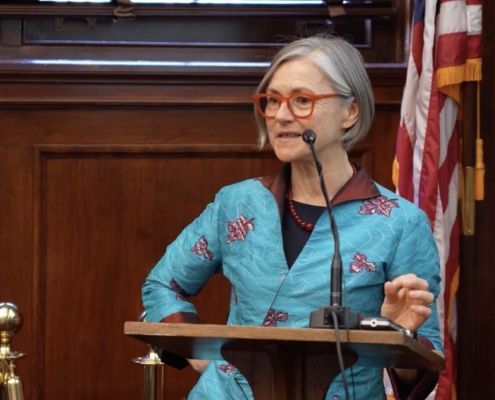
“Inherent Danger, Unaffordable Power” Capitol Hill Briefing, June 2, 2026 featuring Former NRC Commissioner Peter Bradford, Dr. Joe Romm, Dr. M.V. Ramana, Prof. Sharon Squassoni, Dr. Edwin Lyman, and Diane Curran Esq. Find the blog with each individual presentation here.